

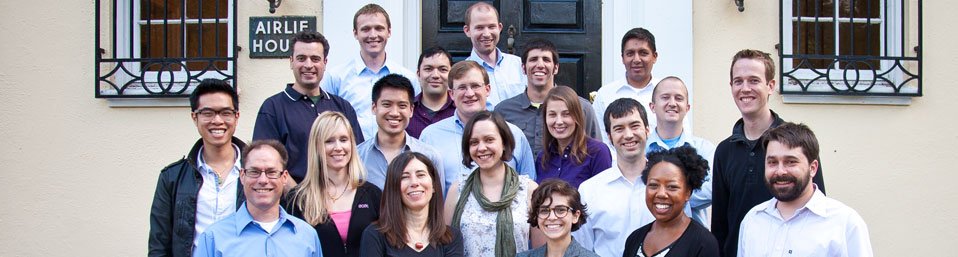
The LEAP Fellows
The LEAP Fellow alumni are an influential, collaborative and networked group of leaders across sectors and disciplines who reflect and act upon synthetic biology’s societal role. Fellows remain active participants in the LEAP program, acting as Mentors, speakers, funders and connectors as well as program advisors.
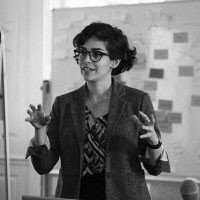
Christina Agapakis is a synthetic biologist whose research explores the role of design, ecology, and evolution in biological engineering. Her scientific work spans many scales, from proteins to plants to microbial communities. Through collaboration with biologists, engineers, artists, and designers, she explores the technical and aesthetic dimensions of synthetic biology from a broad perspective. In addition to her research and teaching in biological engineering and design, she explores the social and ethical dimensions of biological engineering through writing and film. Having recently completed her Ph.D. in Pamela Silver’s lab at Harvard University, Christina is currently a postdoctoral researcher in UCLA’s Department of Molecular, Cell, and Developmental Biology, and a L’Oréal USA For Women in Science Fellow.
Patrick Boyle is Wasilla, Alaska’s, first synthetic biologist. He recently completed his Ph.D. in Pamela Silver’s lab at Harvard Medical School. His graduate work there included in silico modeling of yeast metabolism, engineering organelles, improving biohydrogen production, circadian metabolomic analysis, and plant engineering. Patrick’s interest in alternative energy and the environment led him to the Harvard University Center for the Environment, where he studied the scientific, engineering, and political challenges of combating climate change. He has also collaborated with Synberc and the Woodrow Wilson International Center for Scholars to evaluate the potential environmental consequences of growing engineered cyanobacteria at industrial scales. Patrick currently leads the development of the Organism Design Pipeline at Ginkgo BioWorks, a synthetic biology company that makes and sells engineered organisms.
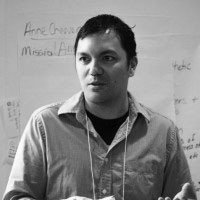
Andrew Chang is a Ph.D. candidate in chemistry at Stanford University. He completed his undergraduate studies at Harvard University. His doctoral research in Christina Smolke’s lab focuses on the design of synthetic RNA switches for programming sensing, processing, and control functions within cells and their application to chemical biosynthesis and targeted cellular therapies. Andrew has taught classes in chemistry, physics, bioengineering, and mathematics as a teaching assistant; worked at the Tech Museum in San Jose, CA; and helped start Stanford’s first iGEM team. He’s currently launching a Ph.D.-wide mentoring program at Stanford that pairs doctoral students with Ph.D. alumni mentors. He is broadly interested in science and technology policy, education, and entrepreneurship.
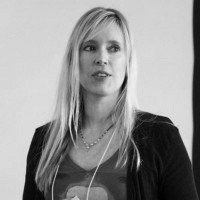
Anne Cheever is an American Association for the Advancement of Science (AAAS) Science and Technology Policy Fellow and Foreign Affairs Officer at the U.S. Department of State in the Office of the Geographer and Global Issues. She is the lead analyst focused on international scientific issues and is responsible for all-source analysis, research, and intelligence support to the Assistant Secretary for Oceans and International Environmental and Scientific Affairs and the U.S. Special Envoy for Climate Change. She also conducts extensive outreach and intelligence liaison with other science and technology focused agencies. Previously she was a postdoctoral fellow at the Cleveland Clinic Lerner Research Institute where she studied the molecular mechanism of selenium incorporation. Anne received her Ph.D. in Cell and Developmental Biology from the University of Illinois at Urbana-Champaign.
John Cumbers has been a synthetic biologist at NASA Ames since 2008, where he has been instrumental in starting NASA’s Synthetic Biology Program. He also organized the first workshop on the applications of synthetic biology to NASA’s mission. John has a Ph.D. in Molecular Biology, Cell Biology, and Biochemistry from Brown University, where he studied the mechanisms of radiation resistance and cold tolerance in cyanobacteria from extreme environments. John recently joined the UC Santa Cruz University Affiliated Research Center at NASA Ames as an Associate Scientist and works in the area of bioelectrosynthesis, using electricity as an energy source to fuel metabolism for the production of food in space. John is also the founder of SynBioBeta, a website, conference and network for synthetic biology startup companies.
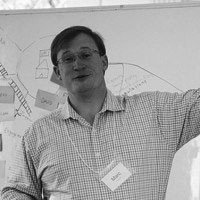
Marc Facciotti is an assistant professor in the Department of Biomedical Engineering and Genome Center at the UC Davis. He received his Ph.D. in Biophysics from UC Berkeley in 2002. Marc’s laboratory currently focuses on comparative genomics and the systems biology of gene regulatory network structure, dynamics, and evolution covering a broad range of activities, from integrated omics to molecular structure dynamics along the way. He is ultimately interested in integrating his research expertise in the context of synthetic biology. In 2009, he founded the UC Davis iGEM team and has mentored teams every year since. Marc also has a strong interest in undergraduate education, and in enhancing the diversity of hands-on creative opportunities for his students. He also enjoys playing drums with a local jazz ensemble.
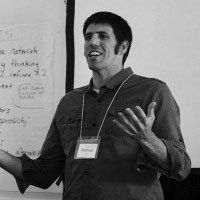
Michael Fisher is a molecular biologist and protein engineer with extensive experience in science outreach and in promoting the welfare of academic researchers. A postdoctoral scholar with UC Berkeley’s Energy Biosciences Institute (EBI), Michael uses synthetic biology tools to enhance the tolerance of microbes to biofuel-relevant chemicals. With strong interests in public engagement and advocacy, Michael coordinates outreach events with the EBI, served as president of the UC Berkeley Postdoctoral Association in 2011, and co-founded the UC Berkeley Postdoc Industry Exploration Program, which connects postdocs and graduate students with Bay Area life sciences companies. Michael earned a Ph.D. in Molecular Biology from Princeton University and a B.S. in Biology from The College of New Jersey.
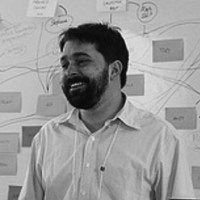
Michal Galdzicki is a senior fellow in the Department of Biomedical Informatics and Medical Education at the University of Washington. His research is focused on informatics for synthetic biologists. He works on the Synthetic Biology Information Lifecycle Management for the Enterprise project with Professors John Gennari and Herbert Sauro, in collaboration with Dr. Evren Sirin from Clark and Parsia, LLC. Michal completed his Ph.D. in Biomedical and Health Informatics at the University of Washington in 2012. As part of his dissertation research project, he co-founded the Synthetic Biology Open Language (SBOL), an information exchange standard for biological engineering. Michal continues to serve as an SBOL Editor. His previous research at the Children’s Hospital Boston examined the genetic basis of autism. He received a B.S. in Biology from the University of Maryland in 2002, and a M.S. in Bioinformatics from Boston University in 2005.
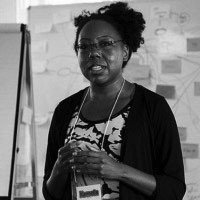
Karmella Haynes is an assistant professor at Arizona State University’s School of Biological and Health Systems Engineering. She also serves as the head judge for the iGEM competition. She earned her Ph.D. in Molecular Genetics at Washington University, St. Louis. Postdoctoral fellowships at Davidson College and Harvard Medical School introduced her to synthetic biology. Her work on bacterial computers was featured on NPR’s Science Friday and in 2008 was recognized as “Publication of the Year” by the Journal of Biological Engineering. Today, her research aims to regulate therapeutic genes by engineering human chromosomes. Karmella is motivated to share mammalian cell resources through open-source repositories so that the synthetic biology community can cooperatively accelerate science’s progress towards rationally designed therapeutics.
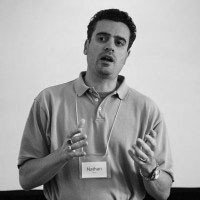
Nathan J. Hillson is the Director of Synthetic Biology Informatics, Fuels Synthesis and Technologies Divisions, at the Joint BioEnergy Institute. Hillson is also the Group Lead of Synthetic Biology Informatics at the Department of Energy’s Joint Genome Institute; Computational Staff Scientist in the Physical Biosciences Division at Lawrence Berkeley National Laboratory; Affiliate Investigator at the Synthetic Biology Engineering Research Center (Synberc); and co-founder and Chief Scientific Officer at TeselaGen Biotechnologies. He holds a PhD in Biophysics from Harvard.
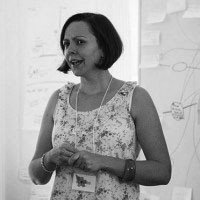
Louise Horsfall is a lecturer in Biotechnology and Synthetic Biology, based within SynthSys – Centre for Synthetic and Systems Biology, at the University of Edinburgh. Her research group is interested in multidisciplinary challenges, and her current projects include the application of synthetic biology tools and techniques to bacterial nanoparticle production, bioremediation and complex polymer degradation. She has a number of partnerships with industry as well as academic collaborations within the UK and across Europe. Prior to joining Edinburgh, she worked as a postdoctoral research associate at the University of Glasgow with Prof. Susan Rosser, and at the University of Leeds in the interdisciplinary Astbury Centre. Louise holds an M.Chem. from the University of Oxford, and a DEA and Ph.D. in Biochemistry from the Université de Liège, Belgium.
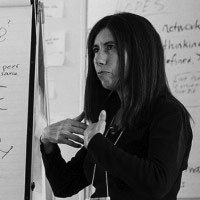
Ellen Jorgensen is a biomedical researcher and a passionate advocate of citizen science. After years in biotech companies, she co-founded the community biolab, Genspace. The DIY lab’s mission is to promote science literacy and demystify advances in bioscience though engaging the public in a hands-on manner. Genspace was awarded Best Social Study in Synthetic Biology at SB 5.0 for communicating synthetic biology to non-scientists. Ellen has spearheaded many of Genspace’s outreach programs such as the Urban Barcode Project, a collaboration between Cold Spring Harbor Laboratory and Genspace where high school students pursue projects using DNA barcoding. She has served as Genspace’s president for the past two years. Ellen has also been a mentor to iGEM teams.
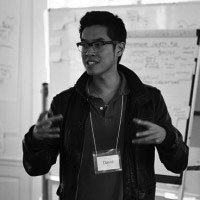
David Kong is a synthetic biologist, artist, and community organizer based out of Cambridge, MA. He conducted his graduate studies at MIT’s Media Laboratory and received a masters in developing technology for printing nanostructures with energetic beams. He was awarded a Ph.D. for demonstrating the first gene synthesis in a microfluidic, or “lab-on-a-chip,” system. He currently conducts synthetic biology, microfluidics, and digital fabrication research at MIT’s Lincoln Laboratory. He is also leading the formation of EMW, a new art, technology and community center in Cambridge, MA. David has performed around the country as a DJ, beat-boxer, vocalist, and rapper and he is an award-winning vocal arranger and producer. He is also a published photographer, and has an upcoming exhibit at the Smithsonian in Washington, D.C.
Derek Lindstrom is a research scientist in the Molecular Tools lab at Agilent Laboratories, the core research program within Agilent Technologies. Derek received his Ph.D. in Molecular, Cellular and Developmental Biology from the UC Santa Cruz and was an American Cancer Society postdoctoral fellow at the Fred Hutchinson Cancer Research Center. His current research focuses on developing fundamental tools and methods for synthetic biology with the aim of making them so accessible that they will no longer be considered specialized tools for synthetic biology, but simply tools for biology.
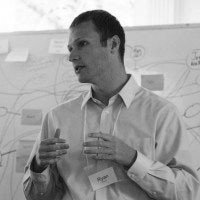
Ryan Morhard is an Associate at the Center for Biosecurity of UPMC. His work focuses on critical biosecurity, public health, and domestic preparedness law and policy aimed at strengthening U.S. national security and resilience by reducing dangers posed by epidemics, biothreats, nuclear disasters, and other destabilizing events. Specifically, he has written on the medium-term future of biotechnology and biological dangers and resulting strategic concerns for homeland and national security. Ryan is an associate editor of Biosecurity and Bioterrorism: Biodefense Strategy, Practice, and Science, and serves as editor of Preparedness Pulsepoints, a weekly update on government action on readiness and response. He received his J.D. from Washington University in St. Louis and his B.S. in Neuroscience from the University of Pittsburgh.
Sarah Munro is a bioengineer in the Biosystems and Biomaterials Division at the National Institute of Standards and Technology (NIST). She develops reference materials, data, and methods to provide confidence in biological measurements. Her current research efforts include analysis of RNA external spike-in controls for method validation in RNA sequencing gene expression measurements, integration of functional genomics measurements to design new proteome reference materials, and development of new technical programs in metrology to support synthetic biology applications. She recently completed a National Research Council postdoctoral research associate award term at NIST and earned her Ph.D. in Biological and Environmental Engineering from Cornell University.
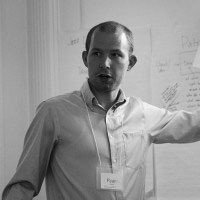
Ryan Ritterson is nearly finished his Ph.D. in Biophysics at UC San Francisco. He is using synthetic biology to design and engineer new photo-controllable proteins, focusing on the cell-cell adhesion protein cadherin. Outside the lab, Ryan has worked to engage and interest the public in science and its relationship to society, especially in a world where most basic research is publicly funded. He is a fellow and founding member of the Synthetic Biology Practices Working Group, and a former member of the SynBERC Student Leadership Council. Ryan has a passion for tackling public policy challenges in synthetic biology and hopes to make the “LEAP” into policy work after graduate school. Ryan received a B.S. in Computational Engineering Science from UC Berkeley.
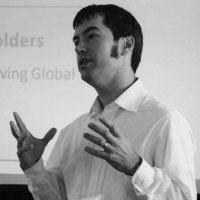
Keith Tyo is an assistant professor of Chemical and Biological Engineering at Northwestern University. Keith’s research group develops synthetic biology technologies to improve the quality of life for the extreme poor. Keith’s previous research was to engineer microbial hosts for the production of polyesters, nutraceuticals, small molecule drugs, and protein therapeutics. Keith received his Ph.D. in Chemical Engineering from MIT and was a NIH National Research Service Award Postdoctoral Fellow at Chalmers University in Sweden. Keith’s work in metabolic engineering and systems biology has appeared in Science, Nature Biotechnology, and BMC Biology. At Northwestern, Keith is the advisor for the Global Health and Sustainability Biotechnologies certificate program in the Masters of Biotechnology Program; he also co-directs the Recombinant Protein Production Core Facility.
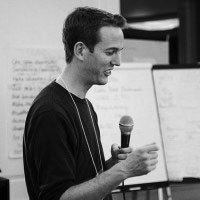
Jeff Ubersax leads the Biology group at Amyris, a renewable products company based in Emeryville, CA. Prior to leading the Biology group, he led the high-throughput screening group and helped drive the develop of Amyris’ automated strain engineering platform and the synthetic biology method employed to rapidly assemble modular pieces of DNA and put them into yeast. Prior to joining Amyris in 2008, he was a Helen Hay Whitney Postdoctoral Fellow in the Department of Chemical and Systems Biology at Stanford University. He received his Ph.D. in biochemistry and molecular biology from UC San Francisco and his B.S. in Chemistry from the University of North Carolina Chapel Hill.
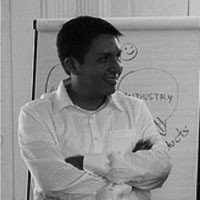
Walter Valdivia is a fellow in the Center for Technology Innovation at Brookings. He studies innovation policy and inequality, and focuses on technology transfer and the governance of emerging technologies. Valdivia’s published work includes studies of: public values of the Bayh-Dole Act, wage disparities resulting from the emergence of nanotechnologies, and the tensions between academic freedom and national security with respect to export controls. He has also co-authored a policy report assessing R&D investments in Arizona. His current research examines the distributional outcomes of various modes of university technology transfer, the institutional path-dependence of innovation, and the role of academic freedom in the governance of emerging technologies. Valdivia holds a B.S. in economics from Universidad Católica Boliviana, and an M.S. in economics and a Ph.D. in public administration from Arizona State University.
 LEAP in words and pictures