

History
The Pilot Program
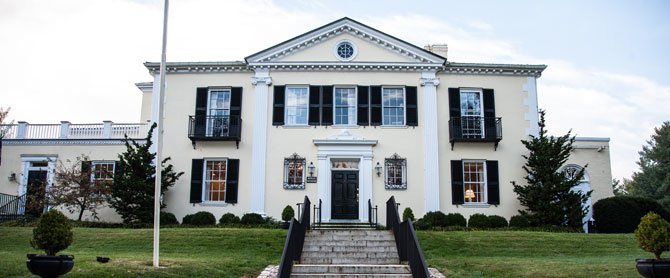
The Inaugural LEAP Workshop was held October 1-5th 2012 at Airlie House, in the Virginia Countryside, just outside Washington, DC.
 The Participants
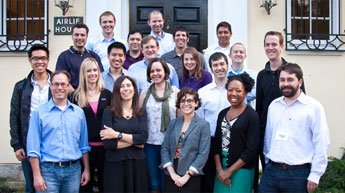
The first class of 20 LEAP Fellows represented a variety of sectors (university, industry, national labs, think tanks, government, amateur/DIY), disciplines (biosciences, engineering, social sciences, law), and career stages (senior grad students to new group leaders). Yet they all shared a common goal: to help orient and organize activities to create a better biotechnology future.
The Mentors
The LEAP Fellows received intensive mentoring by a world-class collection of leaders across disciplines and sectors. Many mentors emphasized that leading a socially responsible future for synthetic biology requires more than technical savvy. Discussions focused on how practitioners can become more aware of how societal needs and concerns shape the course of biotechnology, and how they can cultivate communication skills to engage with diverse set of stakeholders. Highlights include:
- Rob Carlson, author of Biology is Technology, gave an overview of the current technical and economic landscape;
- Mary Maxon, formerly of the Obama Administration’s Office of Science & Technology Policy, described strategies for influencing policy and her experience of coordinating national strategies for biotechnology;
- Dan Sarewitz, co-director of the Consortium for Science Policy and Outcomes at Arizona State University, shed light on the importance of understanding the social context and limits of technological solutions;
- John Warner, father of Green Chemistry, shared his story of establishing more sustainable approaches in industrial chemistry;
- Edward You, Supervisory Special Agent, FBI Weapons of Mass Destruction Directorate, Bioterrorism Prevention Program, spoke about safeguarding research; and
- Laurie Zoloth, a bioethicist at Northwestern University, challenged participants to examine their assumptions about what it means to create public ‘good’.
The Plans
By week’s end, participants had collaborated to develop a set of strategic action plans that targeted several challenges facing the synthetic biology community. One group developed a proposal for a new approach to funding environmental risk research. Another worked on structuring undergraduate curricula to train students for the biotechnology jobs of the future. Other ideas included developing measurement standards for the efficacy and safety of bioproducts, starting an international synthetic biology society, and developing synthetic biology educational efforts through local “DIY” community biotech labs. These plans were pitched to a guest expert panel who gave critical feedback and suggested next steps.
LEAP Fellows developed their plans into a series of short strategic action plan papers to share their ideas with the broader community. You can read the action plans here. Many LEAP Fellows are already implementing and refining their plans. We’ve helped catalyze new courses and workshops, and research programs, engaged with funding and policy leaders, and much more.
Summary
The Inaugural LEAP workshop created a unique experience that gave participants the time and space to collaborate on key questions within the field, and to think about how communities can work together to best advance biotechnology. One participant commented that, “LEAP provided an enriching opportunity to work with an interdisciplinary group of exceptional individuals towards a noble goal – I treasured the experience and expect to see benefits for the rest of my career.”
 LEAP in words and pictures