

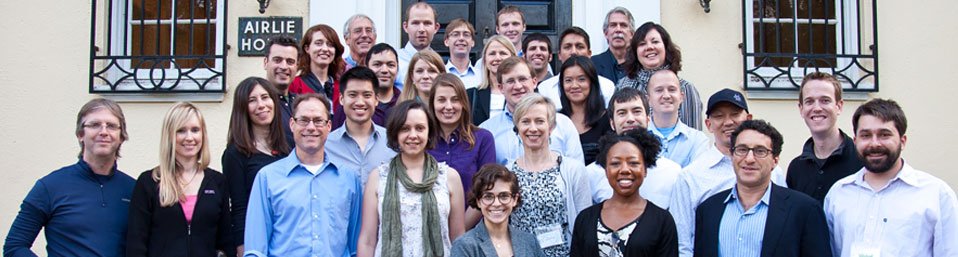
The LEAP Advisory Board
LEAP’s Advisory Board represent leaders from key partner organizations. They provide critical vision and support to the LEAP program and its growing community.

Drew Endy is a founder of the field of synthetic biology one of its most public leaders. He is Assistant Professor of Bioengineering at Stanford University. Drew’s research focus is on developing foundational tools that make it easier to engineer biology so that many more biotechnology applications can be readily realized–from medical therapies, to chemical and materials manufacture, to environmental sensing and remediation. Endy founded and is President of the the BioBricks Foundation, a non-profit working to develop and open access to the tools of biotechnology. He also co-founded the Synthetic Biology working group, the Registry of Standard Biological Parts, and the International Genetically Engineered Machines (iGEM) competition, a worldwide genetic engineering competition in which thousands of students from around the world participate. In addition to the BioBricks Foundation, Drew has also been instrumental in founding several other organizations, including the Molecular Sciences Institute, Codon Devices, and Gen9. He received a Ph.D. in Biochemical Engineering from Dartmouth College.

Paul Freemont is Chair of Protein Crystallography and currently Head of the Division of Molecular Biosciences at Imperial College London. He joined Imperial in 2000 as Director of the Centre for Structural Biology leaving the CRUK London Institute where he established experimental Structural Biology research. His own interdisciplinary research interests have focused on understanding how disease-linked proteins work at the molecular level and he has made several important contributions in this field including the identification and naming of a novel protein domain (RING finger) found in many cancer-linked proteins including BRCA1 and MDM2.
He has also determined a number of important crystal structures including the human DNA repair enzyme Ape-1, XRCC1 BRCT domain, procine spasmolytic polypeptide, and the disease associated ATPase p97. In addition his laboratory has a strong interest in nuclear cell biology, which was driven by the co-discovery of SUMO-1 as a modifier of the Acute Promyelocytic Leukaemia associated PML protein. He has recently developed new quantitative approaches to aid the understanding of mammalian interphase nuclear organisation. In addition to his research interests, he has served on the Molecules, Genes and Cells Wellcome Trust panel, chaired the Imperial Life Science Infrastructure committee, coordinated the development of high-field NMR and Imaging facilities at Imperial and sits on the Scientific Advisory Board of the Chemical Biology Centre.
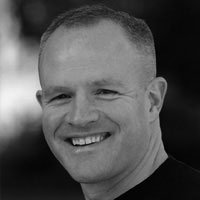
Jay D. Keasling is the Hubbard Howe Jr. Distinguished Professor of Biochemical Engineering at the University of California, Berkeley. He is Director of the Synthetic Biology Engineering Research Center, Associate Director of Biosciences at Lawrence Berkeley National Laboratory, and CEO of the Joint BioEnergy Institute. He is considered one of the foremost authorities in synthetic biology, especially in the field of metabolic engineering. His research focuses on engineering microorganisms for environmentally friendly synthesis of small molecules or degradation of environmental contaminants. Keasling’s laboratory has engineered bacteria and yeast to produce the precursor to the antimalarial drug artemisinin, advanced biofuels, and soil microorganisms to accumulate uranium and degrade nerve agents. He is the recipient of numerous awards, including the 2006 Scientist of the Year Award from Discover Magazine, and a $42.5 million grant from the Bill and Melinda Gates Foundation to develop and distribute the low-cost malaria treatment created in his lab. Dr. Keasling is a Fellow of the National Academy of Engineering. He received his Bachelor’s Degree at the University of Nebraska-Lincoln, and his Ph.D from the University of Michigan.

Professor Kitney is Professor of BioMedical Systems Engineering; Chairman of the Institute of Systems and Synthetic Biology; and Co-Director of the EPSRC National Centre for Synthetic Biology and Innovation. He has published over 300 papers in the fields of synthetic biology, mathematical modelling, biomedical information systems, and medical imaging. Kitney was Chair of The Royal Academy of Engineering Inquiry into Synthetic Biology – Synthetic Biology: scope, applications and implications, published in May 2009.
Kitney was a member of the British Government’s working group on the development of a Roadmap for synthetic biology for the UK and a member of The Royal Society’s Working Party on Synthetic Biology. He is a member of the British Government’s Leadership Council for Synthetic Biology and a member of the group developing a strategy for synthetic biology for the EU.

Paula Olsiewski is Program Director at the Alfred P. Sloan Foundation where she directs the Indoor Environment and Biosecurity programs as well as the Synthetic Biology Initiative. She co-directs the Energy and Environment Program and oversees the Sloan Public Service Awards and the Sloan Awards for Excellence in Teaching Science and Mathematics. Paula serves on numerous advisory committees and boards, including the advisory board for the National Consortium for the Study of Terrorism and Responses to Terrorism (START), a Center of Excellence of the U.S Department of Homeland Security based at the University of Maryland. She was a member of the NRC Committee on Advances in Technology and the Prevention of Their Application to Next Generation Biowarfare Threats, which produced the “Globalization, Biosecurity, and the Future of Life Sciences” Report. Prior to joining the Sloan Foundation, Paula directed the New York City Biotechnology Initiative, established and directed the technology licensing office at the Hospital for Special Surgery, and directed product development at Enzo Biochem, Inc. She received a Ph.D. in Biological Chemistry from MIT.

David Rejeski directs the Science and Technology Innovation Program (STIP) of the Woodrow Wilson Center for Scholars. His research portfolio includes synthetic biology (www.synbioproject.org), nanotechnology (www.nanotechproject.org), participatory technology assessment, geoengineering, and the application of information technologies, computer games, and social media to public policy challenges. Rejeski is also a Visiting Scholar at the Environmental Law Institute, was a Visiting Fellow at Yale University’s School of Forestry and Environmental Studies, and an adjunct affiliated staff member at RAND. Prior to joining the Wilson Center, he worked at the White House Council on Environmental Quality (CEQ) and the Office of Science and Technology (OSTP) on a variety of technology, R&D, and policy initiatives, and the Future Studies Unit at the Environmental Protection Agency. He sits on the advisory boards of a number of organizations, including the Board on Global Science and Technology of the National Academy of Sciences, the expert panel advising DARPA’s Living Foundries Program and the Synthetic Biology Engineering Research Center (SynBERC). Dave has graduate degrees in public administration and environmental design from Harvard University and Yale University and a degree in industrial design from the Rhode Island School of Design.

Randy Rettberg is a staunch evangelist for synthetic biology. An engineer by training, he worked for years as an Internet pioneer at BBN (now Genuity), later he moved to Apple Computer, as a Distinguished Engineer, and then Sun Microsystems, where he was CTO for storage systems. He came to MIT as a principal research engineer in the biological engineering division. Randy is President of the International Genetically Engineered Machine (iGEM) Foundation. IGEM is the premiere undergraduate Synthetic Biology competition, started at MIT in 2003 by Rettberg, Tom Knight, and Drew Endy, and now drawing 250 student teams who use existing and newly created BioBrick™ parts to build biological systems and operate them in living cells. iGEM also operates the Registry of Standard Biological Parts, a continuously growing collection of genetic parts that can be mixed and matched to build synthetic biology devices and systems. Founded in 2003 at MIT, the Registry is part of the Synthetic Biology community’s efforts to make biology easier to engineer. It provides a resource of available genetic parts to iGEM teams and academic labs.
 LEAP in words and pictures